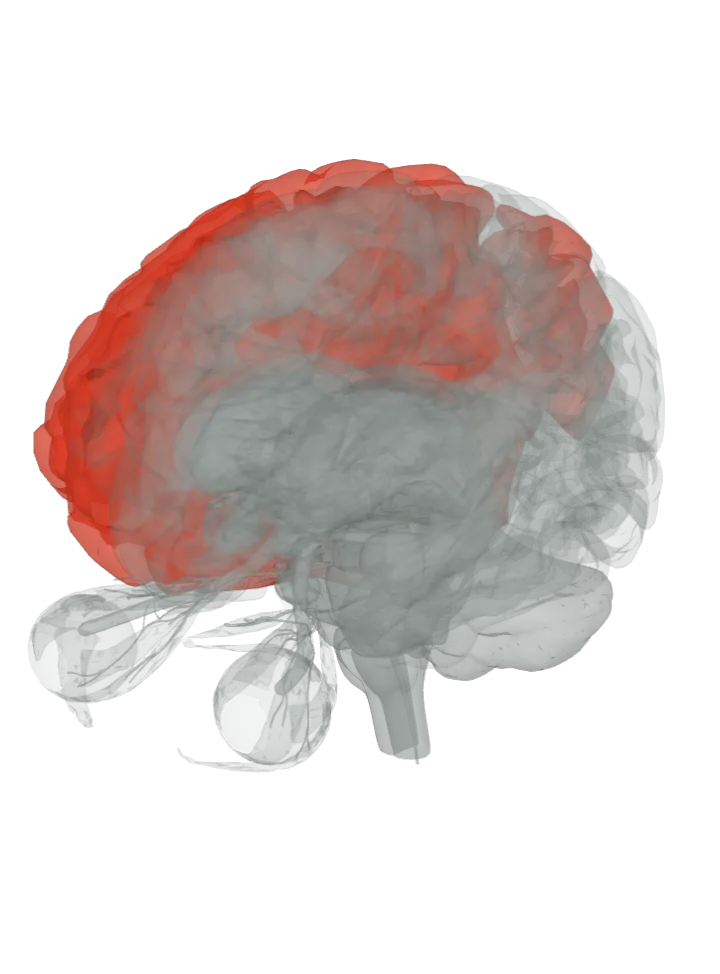
How they work together
- Self-related processing runs along the cortical midline: every study in a meta-analysis of imaging studies on the self found medial cortex active for self-related material, falling into ventral, dorsal and posterior clusters whatever the task. [1]
- These midline regions overlap substantially with the default mode network, the regions active when you rest and are not focused on the outside world; the medial parietal hub was needed to retrieve judgements about yourself. [9][2][7]
- Body awareness is one root of self-awareness: interoception is the perception of internal bodily states, and heightened interoceptive sensitivity has been linked to stronger emotional self-awareness. [9][3]
- The mirror test, whether an animal touches a mark on its own body that it can see only in a mirror, is a simple measure of self-awareness; elephants, bottlenose dolphins and magpies are among the animals that pass it. [9]
- Honest limit: these are networks seen in imaging, not single centres; self-awareness has no agreed seat, much of the midline activity also answers to familiar people, and the anterior cingulate cortex, medial prefrontal cortex and precuneus are regions on lit parts, so whole parts are lit, not exact borders. [2][1][10]
Keeping your own feeling apart from someone else’s is part of empathy: the empathy page lights the right supramarginal gyrus that does this. [11] What part of the brain controls empathy?
The midline regions of self-awareness overlap substantially with the default mode network, which lights the medial prefrontal cortex, posterior cingulate cortex and precuneus with the angular gyrus, hippocampus and temporal cortex. [9] Where is the default mode network?